Address
824-825, St.no 2, Murad Pura Rd, Miller Ganj, Ludhiana, Punjab 141001

What Are High Tensile Nuts and Bolts? Complete Guide
In modern construction, infrastructure development, heavy engineering, automotive manufacturing, and industrial machinery, the strength of every connection matters. Whether it is a steel bridge, a high-rise building, a power plant, or heavy equipment, the reliability of the fastening system directly impacts safety and performance. This is where high tensile nuts and bolts play a critical role.
High tensile fasteners are specifically designed to withstand heavy loads, extreme pressure, vibration, and demanding operating conditions. Compared to ordinary fasteners, they offer superior tensile strength, durability, and resistance to mechanical stress, making them the preferred choice for critical industrial applications.
As a trusted High Tensile Nut Bolt Manufacturer in India, JVS Nut Bolt delivers premium-quality fastening solutions that meet international quality standards and cater to industries worldwide.
In this comprehensive guide, we will explore everything you need to know about high tensile nuts and bolts, including their types, grades, applications, benefits, manufacturing process, and how to choose the right fasteners for your project.
What Are High Tensile Nuts and Bolts?
High tensile nuts and bolts are high-strength fasteners manufactured using specially engineered alloy steel or carbon steel materials. These fasteners undergo heat treatment processes to achieve superior tensile strength and load-bearing capacity.
The term “high tensile” refers to the ability of the fastener to resist pulling forces without breaking or deforming. These fasteners are designed to maintain structural integrity under extreme stress, making them ideal for heavy-duty applications.
Unlike standard bolts, high tensile bolts can withstand significantly greater loads and are commonly used in:
- Construction projects
- Infrastructure development
- Steel structures
- Power plants
- Heavy machinery
- Mining equipment
- Oil and gas facilities
- Railway projects
- Solar energy installations
- Automotive manufacturing
Types of High Tensile Nuts and Bolts
High Tensile Hex Bolts
Hex bolts are among the most widely used industrial fasteners.
Features:
- Six-sided head design
- Easy installation
- Excellent torque capability
Applications:
- Structural steel assemblies
- Machinery installation
- Construction projects
Heavy Hex Bolts
Heavy hex bolts have larger heads and bearing surfaces compared to standard hex bolts.
Benefits:
- Better load distribution
- Improved clamping force
- Enhanced structural stability
Stud Bolts
Stud bolts are threaded rods with nuts fitted on both ends.
Applications:
- Pressure vessels
- Petrochemical plants
- Pipeline systems
Foundation Bolts
Foundation bolts secure structures to concrete foundations.
Applications:
- Industrial buildings
- Transmission towers
- Manufacturing facilities
As a leading Foundation Bolt Manufacturer in India, JVS Nut Bolt supplies durable, foundation bolts for demanding projects.
Understanding Tensile Strength
Before understanding high tensile fasteners, it is important to know what tensile strength means.
Tensile strength refers to the maximum amount of pulling force a material can withstand before breaking.
For example:
If a bolt is subjected to increasing force and eventually breaks at a specific load, that load determines its tensile strength.
The higher the tensile strength:
- The stronger the bolt
- The greater the load-bearing capacity
- The better the performance under stress
This is why industries requiring reliable fastening solutions prefer high tensile bolts and nuts over conventional fasteners.
Manufacturing Process of High Tensile Nuts and Bolts
At JVS Nut Bolt, every fastener undergoes strict quality control and precision engineering.
1. Raw Material Selection
High-quality alloy steel or carbon steel is selected.
2. Forging
High-quality alloy steel or carbon steel is selected.
3. Thread Rolling
Threads are formed with precision machinery.
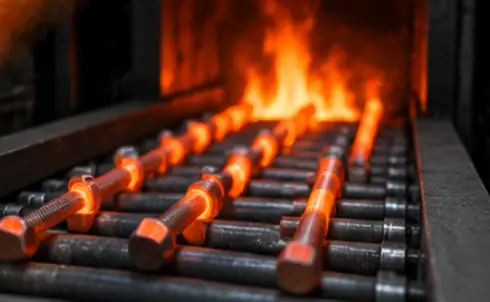
4. Heat Treatment
Fasteners undergo controlled heating and cooling processes to improve strength.
5. Surface Finishing
Various coatings are applied:
- Zinc plating
- Hot-dip galvanizing
- Black oxide coating
6. Quality Testing
Each batch is tested for:
- Tensile strength
- Hardness
- Dimensional accuracy
- Corrosion resistance
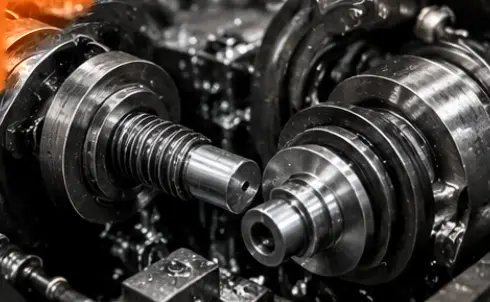
High Tensile Nuts and Bolts Manufacturer in India
Bulk Nut and Bolt Manufacturer in India or customized fasteners?
👉 Contact our team today for:
- Best pricing
- Technical consultation
- Custom manufacturing solutions
Benefits of High Tensile Nuts and Bolts
Choosing a reliable High Tensile Nut Bolt Manufacturer ensures that every fastener meets international quality standards, offers superior load-bearing capacity, and delivers long-term performance in demanding industrial environments.
1. Superior Strength
High-quality alloy steel or carbon steel is selected.
2. Enhanced Durability
High-quality alloy steel or carbon steel is selected.
3. Improved Safety
High-quality alloy steel or carbon steel is selected.
4. Corrosion Resistance
Protective coatings improve resistance to environmental factors.
5. Reduced Maintenance
Their durability minimizes replacement frequency and maintenance costs.
6. Cost Efficiency
Long-term savings due to reduced failures and downtime.
| Feature | High Tensile Bolts | Stainless Steel Bolts |
|---|---|---|
| Strength | Higher | Moderate |
| Load Capacity | Excellent | Good |
| Corrosion Resistance | Depends on protective coating | Excellent |
| Cost | Cost-effective | Higher |
| Heavy-Duty Applications | Ideal for heavy structural and industrial applications | Suitable for moderate-duty and corrosion-prone environments |
How to Choose the Right High Tensile Nuts and Bolts
Consider the following factors:
Load Requirements
Determine the maximum load the fastener will experience.
Environmental Conditions
Consider:
- Moisture
- Chemicals
- Temperature
- Corrosion exposure
Fastener Grade
Choose the appropriate grade:
- 8.8
- 10.9
- 12.9
Industry Standards
Ensure compliance with:
- ISO Standards
- DIN Standards
- ASTM Specifications
Supplier Reputation
Partner with an experienced and reliable manufacturer.
Why Choose JVS Nut Bolt – Leading High Tensile Nut Bolt Manufacturer in India
JVS Nut Bolt has established itself as a trusted High Tensile Nut Bolt Manufacturer, Fastener Manufacturer in India, and Fasteners Exporter from India by delivering superior quality fastening solutions.
Our Strengths
✔ Premium-grade raw materials
✔ Advanced manufacturing technology
✔ Customized fastening solutions
✔ Strict quality control
✔ Competitive pricing
✔ Timely delivery
✔ Global export capabilities
✔ Industry-standard certifications
Our extensive product range includes:
- High Tensile Nuts
- High Tensile Bolts
- Foundation Bolts
- Stud Bolts
- U-Bolts
- Heavy Hex Bolts
- Industrial Fasteners
- Structural Fasteners
Frequently Asked Questions
Q1. What are high tensile nuts and bolts?
High tensile nuts and bolts are high-strength fasteners manufactured from carbon steel and designed to withstand heavy loads and extreme stress.
Q2. What is the most commonly used grade of high tensile bolt?
Grade 8.8 is the most commonly used high tensile bolt grade in construction and industrial applications.
Q3. Where are high tensile bolts used?
They are used in construction, infrastructure, automotive, power plants, solar projects, railways, oil and gas facilities, and heavy engineering industries.
Q4. What is the difference between Grade 8.8 and Grade 10.9 bolts?
Grade 10.9 bolts offer higher tensile strength and load-bearing capacity than Grade 8.8 bolts.
Q5. Are high tensile bolts corrosion-resistant?
They can be made corrosion-resistant through coatings such as zinc plating, black oxide coating, or hot-dip galvanization.
Q6. Who is the leading High Tensile Nut Bolt Manufacturer in India?
JVS Nut Bolt is a trusted High Tensile Nut Bolt Manufacturer in India, offering premium-quality industrial fasteners including high tensile bolts, nuts, foundation bolts, threaded rods, washers, and customized fastening solutions for construction, infrastructure, automotive, railway, and heavy engineering industries.