Address
824-825, St.no 2, Murad Pura Rd, Miller Ganj, Ludhiana, Punjab 141001

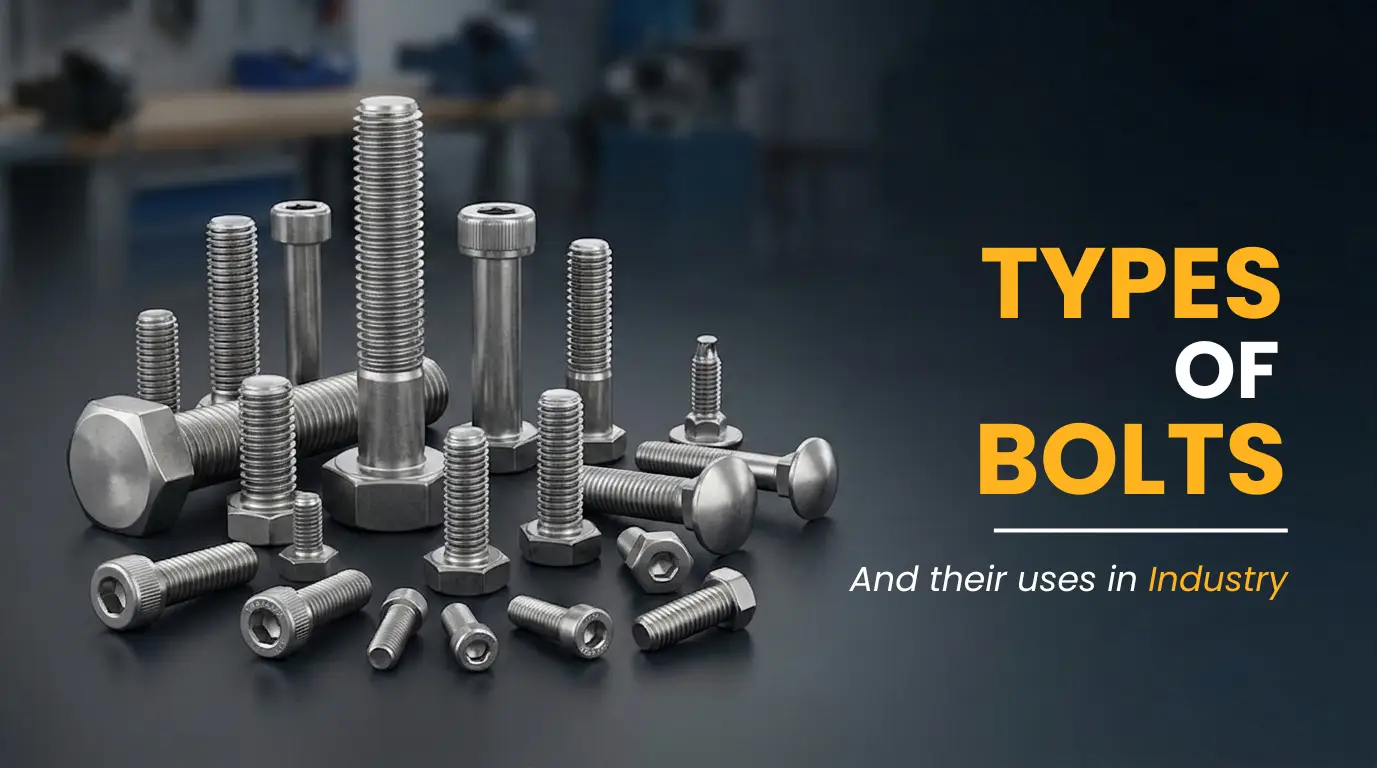
Industrial bolts are essential fastening components used in construction, manufacturing, automotive, and heavy engineering industries. As a leading Industrial Bolts Manufacturer in India, JVS Nut Bolt offers premium-quality MS and High Tensile bolts designed for durability, strength, and reliable industrial performance.
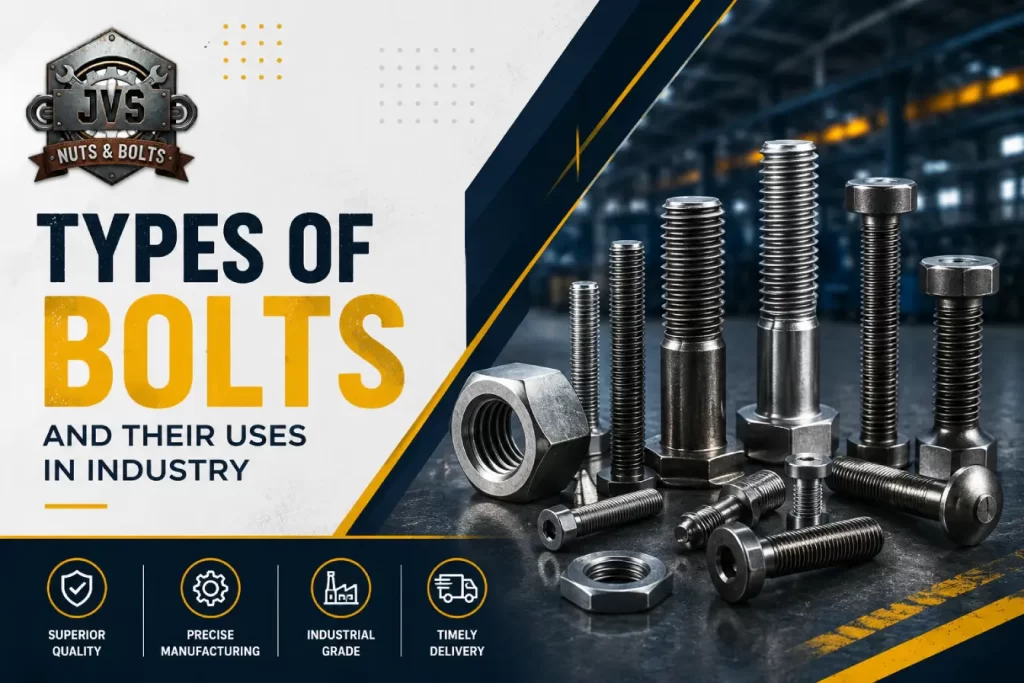
As a trusted nut bolt manufacturer in Ludhiana, we often see that many buyers are unsure about which type of bolt to use. This guide will help you understand the most common types of bolts and their practical applications.
1. Hex Bolts
Hex bolts are the most widely used bolts in construction and industrial applications. They have a six-sided head and are known for their strength and versatility.
Uses:
- Structural work
- Construction projects
- Heavy machinery
Why choose them?
They offer high strength and are easy to install using standard tools.
2. Allen Bolts
Allen bolts are used where precision and clean finishing are important. They are tightened using an Allen key.
Uses:
- Machinery
- Automotive parts
- Equipment assembly
Why choose them?
Ideal for tight spaces and applications requiring a neat finish.
3. Flange Bolts
Flange bolts come with a built-in washer-like base, which helps distribute the load.
Uses:
- Automotive industry
- Machinery
- Structural joints
4. Foundation Bolts
Foundation bolts are used to fix structures or machines securely to concrete surfaces. These bolts are embedded into the foundation to provide strong support and stability.
Uses:
- Machinery installation
- Structural foundations
- Industrial equipment setup
Why choose them?
They ensure a firm base connection, especially where heavy loads and vibration are involved.
5. Stud Bolts
Stud bolts are threaded rods used with nuts on both ends. They are commonly used in flange connections and high-pressure applications.
Uses:
- Pipeline connections
- Oil & gas industry
- Heavy machinery
Why choose them?
They provide strong and uniform clamping force, making them ideal for critical applications.
Best Bolts Manufacturer in Ludhiana India
Need bulk Bolts supplier in India or customized fasteners?
👉 Contact our team today for:
- Best pricing
- Technical consultation
- Custom manufacturing solutions
Materials Used in Industrial Fasteners
The material used in industrial bolts directly affects their strength, durability, corrosion resistance, and overall performance in industrial applications. Choosing the right bolt material is essential for ensuring long service life, high load-bearing capacity, and reliable fastening in demanding environments.
As a leading Industrial Bolts Manufacturer in India, JVS Nut Bolt manufactures high-quality industrial bolts using premium-grade MS (Mild Steel) and High Tensile materials to meet diverse industrial requirements.
MS (Mild Steel) Bolts
MS bolts are widely used in general engineering, construction, fabrication, and industrial assembly applications due to their affordability, durability, and easy machinability. Mild Steel bolts provide excellent fastening performance for medium-duty applications and are suitable for structures, machinery, and equipment where extreme tensile strength is not required.
High Tensile Bolts
High Tensile bolts are specially designed for heavy-duty industrial applications that require superior strength, high load-bearing capacity, and resistance to extreme pressure. These bolts are manufactured using high-grade alloy steel materials and undergo heat treatment processes to achieve enhanced mechanical properties.
High Tensile bolts are widely used in industries such as construction, railways, infrastructure, power plants, oil & gas, automotive, and heavy engineering where safety and performance are critical.
Difference Between MS Bolts and High Tensile Bolts
| Feature | MS Bolts | High Tensile Bolts |
| Material Strength | Medium Strength | Very High Strength |
| Application | General Industrial Use | Heavy-Duty Industrial Use |
| Cost | Economical | Premium Quality |
| Load Capacity | Moderate | High Load Bearing |
| Durability | Good | Excellent |
| Industries | Fabrication, Construction | Infrastructure, Automotive, Heavy Engineering |
Industrial Applications of Bolts
Industrial bolts are essential fastening components used across multiple sectors. Different bolt types are selected based on load conditions, environmental exposure, and structural requirements.
Construction Industry
Bolts are extensively used in bridges, steel structures, buildings, towers, and infrastructure projects. Structural bolts and anchor bolts provide strong and secure fastening in load-bearing applications.
Automotive Industry
The automotive industry uses industrial bolts for engine assembly, chassis fastening, suspension systems, and vehicle body manufacturing. High-strength bolts help ensure safety and performance under vibration and stress.
Railway Industry
Railway systems use heavy-duty bolts in tracks, coaches, bridges, and rail infrastructure to ensure maximum safety and vibration resistance.
Manufacturing Industry
Machinery and production equipment require precision bolts for accurate assembly and long-term operational reliability. Industrial bolts help reduce equipment downtime and maintain structural integrity.
Aerospace Industry
Aerospace fasteners require exceptional precision, lightweight design, and high tensile strength. Specialized industrial bolts are used in aircraft assembly and critical aviation applications.
How to Choose the Right Industrial Bolt
Selecting the correct industrial bolt depends on several important factors, including material type, load capacity, environmental conditions, thread design, and application requirements. Using the wrong bolt can lead to equipment failure, safety risks, and costly repairs.
Factors to Consider:
Bolt material and coating
Tensile strength and grade
Thread type and size
Corrosion resistance requirements
Load-bearing capacity
Temperature and environmental exposure
Industry standards and certifications
Why Industrial Bolt Quality Matters
High-quality industrial bolts are critical for maintaining safety, efficiency, and structural performance in demanding environments. Precision manufacturing, accurate threading, and strict quality control help ensure that bolts perform consistently under heavy loads and extreme conditions.
Reliable industrial bolts help:
Prevent loosening and joint failure
Improve machinery performance
Enhance structural stability
Reduce downtime and maintenance costs
Increase operational safety